Iaijutsu has many life lessons as well as a mental and physical exercise. We really don’t practice to learn how to cut a real life person with a sword, so why do it? It’s because we learn to cut other things down that we aren’t even aware off.
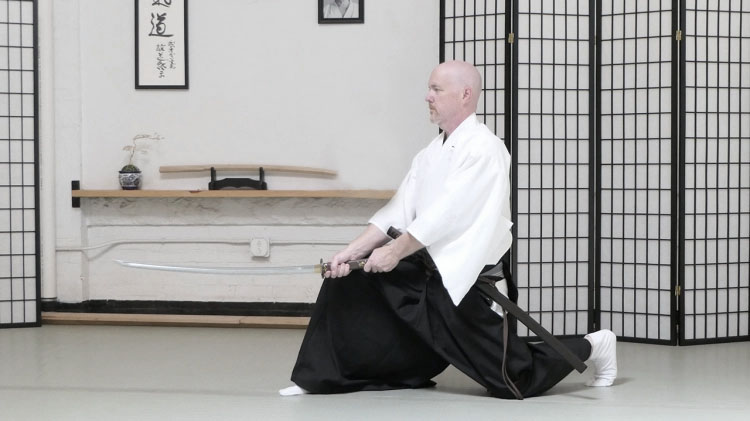
One of the waza (Techniques) that we practice is called Yaegaki. It’s a Shoden (Beginner) waza in which the assumption is you draw your sword at your opponent and successfully cut him. However because he has moved backwards, you then need to take an extra step ahead of you in order to deliver the finishing mercy cut. As you start to put your sword away, you realize your enemy is not fully defeated because he tries to cut at your leg while on the ground bleeding out. You then perform a certain type of block to protect your lower leg (Sunegakoi). You can then take that opportunity to enter his space, overtake again to perform that mercy cut.
There is certainly a lot going on here, especially for a beginner, however it is a hint to a very important life lesson.
Yaegaki is the fifth waza in this set. In the first four, we learn some basic movements in four different directions. Forward, left, right and rear. With Yaegaki, we now learn an additional concept of going further in distance by taking that extra step. So not only have we gone further from our starting point, we also need to defend the space we just took. (Perhaps a prelude for a future waza?)

If we then look at other waza in the set like Ukenagashi, Tsukekomi and Oikaze, we see other angles of starting points and even further distances. This can give us a hint as to the title of Yaegaki and what is could mean as an Iaijutsu practitioner.
Yaegaki means “Eight fold fences” it also means “Barrers within Barriers”. This meaning or concept has both modern and mythological meaning in Japanese culture.
In a more modern application like we have seen in recent television programs and movies, The “Barrier” is a method for segregating one’s true feelings than what are displayed publicly. This enables one to live or work in an environment of great stress in which you should not display your TRUE feelings. Hence the “Barrier” within your mind. In America, we may call it a “Speech Filter” or “Wearing your emotions on your sleeve.”
However when I practice Yaegaki, I think of a much much older version of “Barriers within Barriers.”
There is a very old classic Japanese story of a Dragon and a Damsel in Distress. However instead of a brave knight defeating the monster with skills he was fooled into thinking he had. This story is a about a different story of trickery and of eight “Doorways” and “Barriers”.
My very abbreviated version is when this mythical god named Susano-no-Mikoto was traveling, he met a terrible sad and stressed couple that were very worried about their last remaining daughter. They explained to Susano-o that they had eight daughters at one time, but the great eight headed dragon Yamata-no-Orochi comes year after year and kills and eats one of their daughters. They now had one daughter remaining named Kushinada-Hime, (Princess of the rice fields) and they were in great fear of losing their last daughter as they knew the dragon would return.

So, Susano-o made a deal with the couple, He would slay the dragon if he could marry their last remaining beautiful daughter. They of course obliged in order to save her.
So how Susano-o defeated the great eight headed dragon, was he first built multi-folded fences (Yaegaki) and he hid the princess inside the Yaegaki. He then poured very strong Sake into eight barrels placed them in an octagon arrangement so as to separate the heads of the dragon in hopes of making it more vulnerable..
When the great Yamata-no-Orochi appeared, the scent of the strong Sake was so overwhelming the dragon could not pick up the scent of the princess. So instead it took down the fences looking for the princess without knowing where she was. Even with eight heads, it could not find her within the clever arrangement created by Susano-o.
Frustrated and tired, the dragon then moved each of it’s heads to different barrels of Sake and drank deeply. The entire monster, eight heads and all, fell asleep. Susano-o then easily cut Yamata-no-Orochi to pieces by his sword. He then Married the princess Kushinada-hime and the rest is mythical history including a greater sword he was rewarded with.
On the place that Kushinada-hime was hidden with Yaegaki (The fences), the shrine was built. Can you guess it’s name? Yup It’s the Yaegaki Shrine located in the Shimane Prefecture in Japan.
So what does this have to do with the fifth waza in the Omori Ryu waza set? Lets look at the entire series here. Like I had mentioned earlier, we learn all different angles within this set. In fact by the end of the set we pretty much see all eight angles within all the different techniques. We may not be cutting towards them, but we certainly have the opportunities to do so. “Yaegaki” is the hint of what we are being enabled to do in our waza.
Variations!

When I practice Yaegaki, I break off into different angles and distances, I may perform the initial draw as it is taught, but then I’ll go to a different angle for the finishing cut. Then as I perform noto and have to perform the block, I may turn my entire body 90 degrees or more to do it. This can be very difficult to do while maintaining proper structure and postures. However the outcome can be fantastic as when I practice Yaegaki “Proper” I am much more confident in my technique as it’s the “easier” version of my variations (Kae waza). Sometimes I do it standing and it turns into happo-giri in a sense. (Eight direction cutting exercise) There’s that number eight again.
Many of you may feel that perhaps as I practice my Yaegaki Drill, I picture myself as Susana-o protecting the princess. But no, I never have pictured myself as any type of demi-god but rather I am the one with a dragon inside of me cutting and blocking over and over across the dojo floor until I have become exhausted and finally cut away the dragon(ego) and put him asleep inside of me for a while. This is Akuma-Barai,(Demon Cutting) and this is also what Yaegaki means to me.
Lets now look at the practicality of this as well..

Variations are very important in our training. Whether its sport, martial arts or even or playing music. One thing for sure, is that having a variety of tools in our arsenal is much more beneficial than just learning one way to do anything. Many sports medicine papers and other research has been written demonstrating the advantages in what’s called “Variability in practice”. Feel free to do a quick search on this and you will see countless works done on this. In future posts i plan on citing some of these.
Now it is very important, in fact EXTREMELY important to learn your Iai waza as they are taught by your teacher. If they tell you not to make any variations or changes it’s because you still need work on your “Kihon” basics. This is Critical, however as teachers lets pretend to do a simple experiment while still not upsetting the Budo gods…

Make believe that when your next two students appear in your dojo, each with nearly identical abilities, teach the first one the very first waza called Mae (forward) ONLY. (Which is what’s usually done anyway). Then teach the second student the first four, Mae, Migi , Hidari and Ushiro right away at the same time. (Forward, left right and rear). Even though in their proper form, these are not going out of the curriculum with any changes, the 2nd, 3rd and 4th are really variations of the first one… aren’t they? So we can say in essence, Migi, Hidari and ushiro are variations of Mae in their basic description.
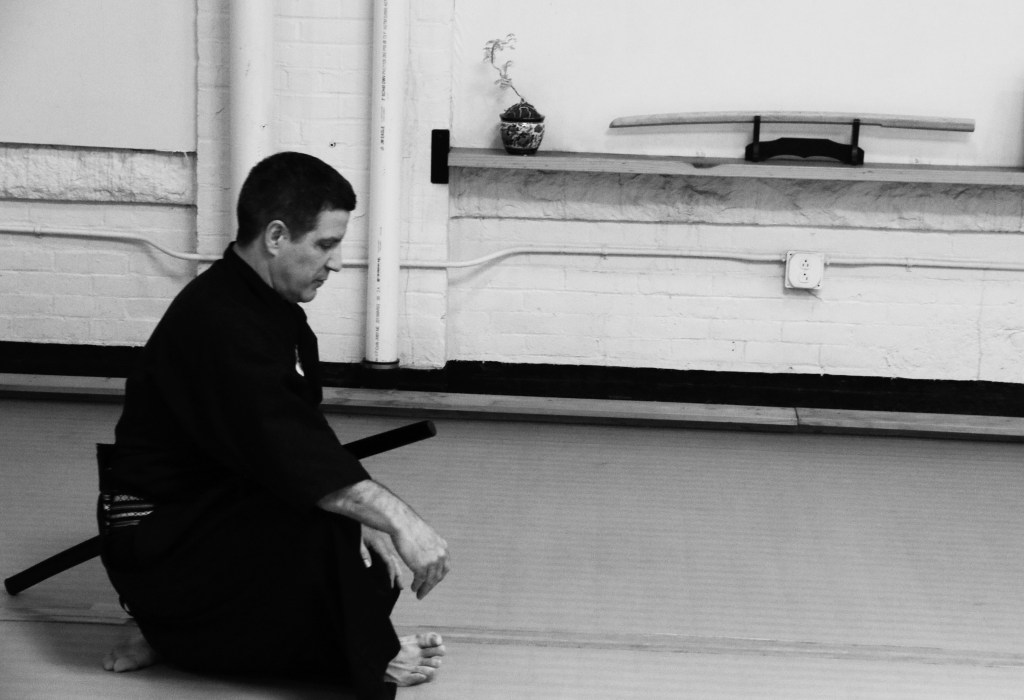
Now the second student will obviously need more time than the first student, learning how to change their balance to move and structure properly. However while the first student is obediently only practicing Mae, The second student is learning more skills at the same time along with what the first student is practicing. After a long period of time, which of the two do you think will perform Mae with more confidence? The first student, or the one that has been practicing “Variations”. I look forward to your answers.
Thanks so much for reading, now go train!
Tom

Tom Duffy a life long martial artist and the head instructor at the Budo Academy Located in Rhode Island. His bio can be found on the club’s website. http://www.thebudoacademy.com
 The Budo Academy Blog
cool..
LikeLiked by 1 person
how do i get into saiza?..
LikeLike
Give us an email, we can send you a video. Thanks for reaching out
LikeLike
thanks for emailing me back. is this the rhode island dojo location, or is it the bakersfield, ca. local dojo? i think i have live streaming now and can learn saiza that way. so pretty much there would be only 4 fluid movements? the rear leg only first, second leg, then the last two legs..? i use to do karate and judo; my saiza went straight down first. so when i feel standing ready, i guess i could practice the 4 movements to get into saiza. thanks, eddie simmons
LikeLike
i use my katana regularly, but need to take it to a saiza movement…
LikeLike