The Modern History
The following is a very short history as I understand it from my own constant research of both reading and listening. Both of these methods have brought me many different stories and facts both subjective and proven.
Over my years of practice I have learned much about Eishin Ryu history, listening to teachers and friends both past and present. And although I am very grateful for all the lessons, much of the information I deem valid has been shared with me by recent instructors and fellow students.
One thing I’ve realized is that the best information comes from one heart to another, just like Eishin Ryu.
Tom Duffy
Muso Jikiden Eishin, Ryu The Modern History:
A collaboration from Dr. Stephen Coniaris, Tim Hamilton and Tom Duffy
Summary:
The modern history of Musō Jikiden Eishin-Ryū follows many of the Koryu arts in our time. Westernization, Politics and Occupation forced many of these once thriving ancient traditions to adapt or die out. Many of them either refusing, or lacking proper leadership, turned into extinct antiques. With drastically reduced numbers, many of the surviving Koryu groups who then chose to evolve with modern times had difficulty adapting. This led to either extinction or extreme fundamental changes for the Ryuha.
For a relatively short period of time, Eishin Ryu was no different, and if it wasn’t for some visionaries. It possibly would have fallen to an end.
The Demise of Koryu
Many feel the beginning of the end for some was the Meiji restoration in the late 1800’s and the collapse of the Feudal system. These social changes began to undermine and challenge the necessity of these arts. Combining that with some enormous cultural events such as the abolition of the samurai class, the Haitorei Edict, and major military changes, it meant a certain end for many classically trained groups.
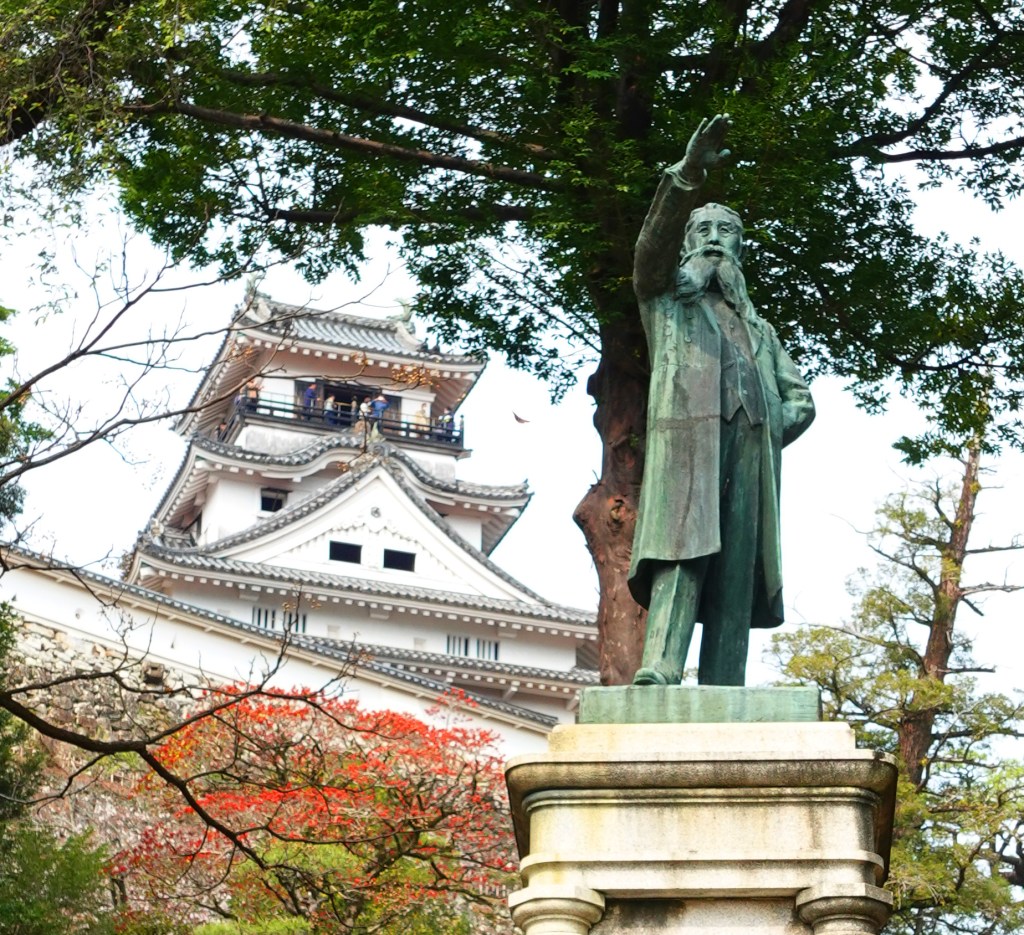
Statue of Taisuke Itagaki outside Kochi Castle. founder of Japan’s first political party.
Modern organizations were formed in an effort to preserve these arts. Representatives from chosen Koryu groups were actually elected, however many of the teachings were refined and standardized. Some even streamlined by headmasters for children and their physical education in the school systems. This was a difficult time for these teachers but some had insight and certainly could have been responsible for the preservation of Eishin Ryu.
Referring back to the Meji Restoration, the 16th Soke, Goto Magobei Masasuke must have found himself in a delicate position between politics and his students. As he was the head master of an art practiced by the very same samurai that were being banned during this time period. And although it was men from the Tosa domain including Goto Sensei that were instrumental in putting the Imperial family back in power, it was the same generation for many in Japan that had to put down their swords, cut their top knots and find a different career. As this was the time Koryu arts were being labeled as “Old Arts”.
Undoubtedly new changes were to be made and Goto sensei played a major part in Eishin Ryu’s evolution. He also obviously felt this change as a threat to Eishin Ryu as he gave out Five Known Menkyo Kaiden. Two of them moved on to eventually help create modern Iaido offspring. However one other, Oe Masaji, played one of the most important roles in the preservation of the Ryuha as well as renaming it, Muso Jikiden Eishin Ryu. Oe Sensei also saw the future drastically changing and most likely inspired by his teacher, also gave out several Menkyo Kaiden. In fact even more than Goto Sensei. Because of this Eishin Ryu was spreading widely. However the challenges were just beginning.

Oe Masaji’s Grave site in Kochi Japan.
Only two headmasters later, during Fukui Harumasa’s tenure, Japan was occupied by America at the end of World War Two. Many teachers and practitioners and perhaps inheritors of many arts were casualties of the war. This had a profound effect on all Koryu arts’ leaders and their numbers. Modern Gendai Budo arts like Kendo and Judo were being heavily defined and populated as the koryu arts were losing numbers to the modern applicable ones which were turning the “Old arts” into more competitive and philosophical renditions.
The Roshukai
After World War II, a troubled Kochi-based lineage nearly vanished due to a split between these newly formed competition-focused organizations of Osaka and the traditional preservation efforts in Kochi. This ultimately culminated in the creation of the Roshukai. An organization dedicated to the preservation of Eishin Ryu’s traditional teachings. It was established by Iwata Norikazu.
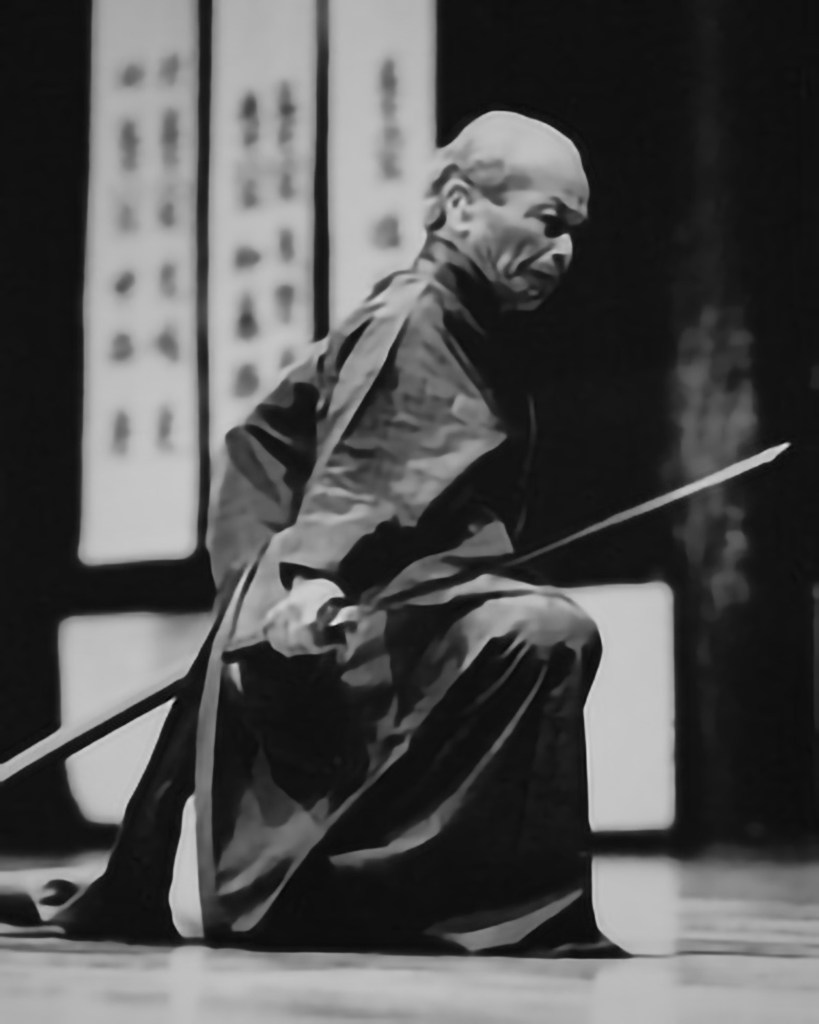
Iwata Norikazu (1913-2011).
A student of Koda Morio sensei in Kendo and Iaido, Iwata Sensei formally petitioned Fukui Sensei to begin training in 1957. The Kochi masters delayed answering his petition for three months to test his perseverance and commitment. Once proven, Iwata Sensei trained for a lifetime, and eventually became a prominent practitioner and teacher. More information on Iwata sensei’s experience with his
teachers can be found in the interview recorded at
https://ejmas.com/tin/tinart_hellsten_1002.htm
The Foundation
Referring back to the 17th headmaster, Ōe Masaji (1852–1927), the legendary reformer who in the early 20th century, unified various fragmented factions of Eishin-Ryū and restructured the curriculum. The core foundation of this Kochi lineage rested on his direct students:
- Yamamoto Takuji Sensei: Iwata Norikazu Sensei practiced under Yamamoto for twenty years; Yamamoto had been a daily, direct student of Ōe Sensei for seven years.
- Mori Shigeki Sensei: Iwata studied under Mori after moving to Tokyo for university; Mori was also a prominent, direct student of Ōe Sensei.
- Fukui Harumasa Sensei: The 19th headmaster of the school, under whom Iwata began his formal Iaido training at age twenty-seven.
Post-War Challenges and the Kono Lineage
Following World War II, the number of practitioners in Kochi fell from thousands to less than two dozen. Facing a severe lack of quality students, Fukui Sensei reached out to Kono Minoru Hyakuren Sensei of Osaka, passing the lineage to him in approximately 1950.
At the beginning of his tenure, Kono Sensei began training hundreds of students in an effort to preserve the art during a time when traditional martial arts were widely discouraged. After a period of time however in the early to mid 1950’s, Kono Sensei opted to standardize and modernize kata to allow for standardized testing and competition.
Initially, Kono Sensei opposed these teaching methods, however he never returned to Kochi and eventually utilized these changes to form the Zen Nihon Iaido Renmei (ZNIR). A modernized organization to act as an umbrella for standardization of several sword styles including Eishin Ryu. It was officially recognized by the Japanese government in 1954.
Back in Kochi, Kono Hayakuren’s sokeship was eventually revoked. The next Kochi headmaster position was then made vacant.
Preserving the Teachings, The Roshukai and the Takeshima Lineage.
Takeshima Toshio Sensei in 1974, was eventually awarded the 20th-generation lineage of the art. During this same time period, the founder of the Roshukai Iwata Norikazu Sensei had developed into a prominent teacher from the Kochi Dojo’s traditional teachings.
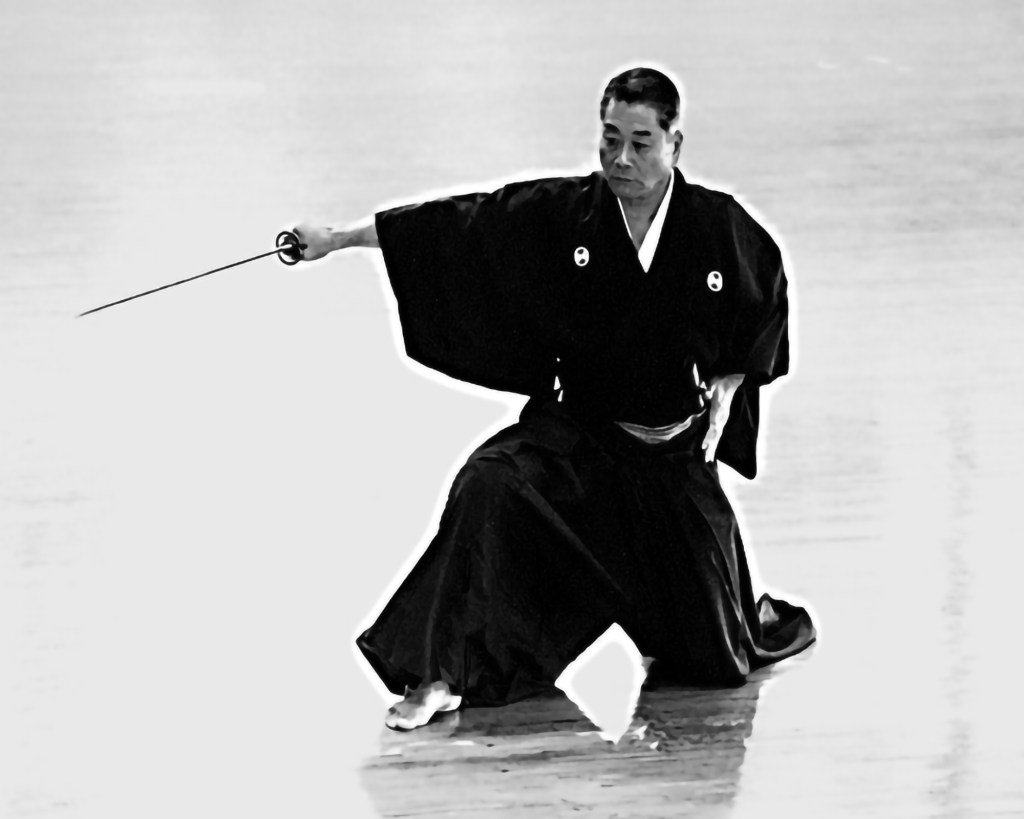
Takeshima Toshio Sensei (1929–2007)
Takeshima Toshio Sensei and Iwata Sensei were both united in their opposition to Kono Sensei’s modernization of the kata as well as the commercialization, and the tradition of a headmaster living outside of Kochi.
Legacy and Shared Values
While the groups highly respected one another, the political and structural differences meant they did not intermix often. Takeshima Sensei’s line found itself in conflict with Kono Sensei’s modernizations. Thusly renamed by sensei as Tosa Jikiden Eishin Ryu as a deliberate political and historical move to distinguish its lineage and localized roots from the mainstream modernized Osaka dojos.
Iwata Sensei largely stayed out of the lineage politics and instead, strongly emphasized his direct interpretation of what his teachers—and by extension, Ōe Sensei—had taught. Iwata Sensei even by request took the UK students, future leaders of the UK Roshukai branch to visit Takeshima Sensei specifically to study two-person kata, cementing their mutual dedication to martial skills, proper distancing (maai), and traditional Eishin-Ryū movement.


Kochi Prefectural Dojo in Kochi (Tosa) Japan
Furthermore, additional visits by Tim Hamilton Sensei from the Rokushai met up with the next two head masters Muranaga Sensei and the current Headmaster Yoshinuchi Sensei had proven very helpful for both training and research for the organization.
During this time period, Tom Duffy Sensei of the Budo Academy in Rhode Island USA, A long time practitioner of Modern Iaido styles from organizations which were either no longer in existence or fragmented, was looking for a more traditional teacher. Already being a long time internet friend of Tim Hamilton, Tom decided to attend some seminars in England and train with the Roshukai teachers. It was here he met his current teacher, Stephen Coniaris Sensei who trained in the Tosa Style of Eishin Ryu under Takeshima Sensei. Tom has since been diligently training under Coniaris Sensei and continues his visits to the UK and Kochi Japan. He has been enjoying helping preserve the Tosa style of Eishin Ryu along with the Roshukai.
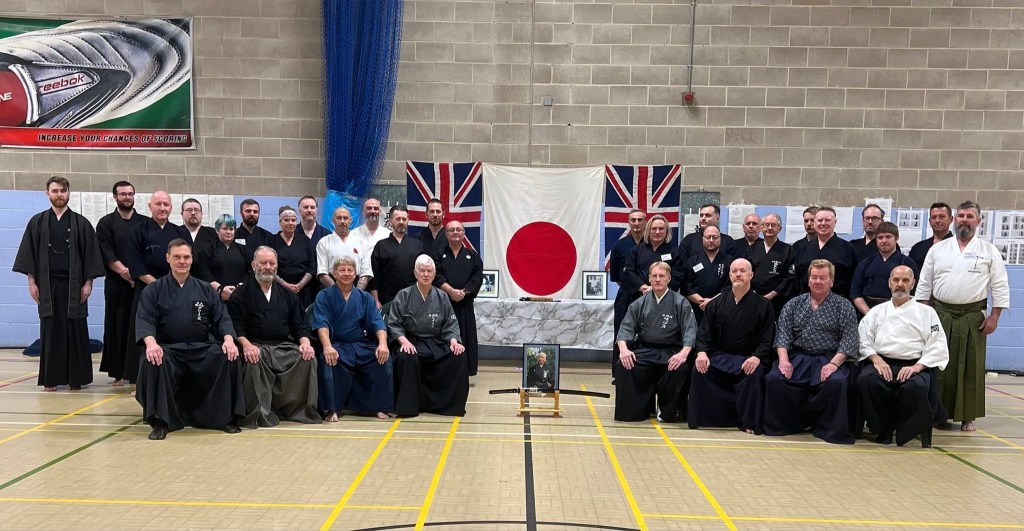
Eikoku Roshukai Leeds Seminar
Tosa Jikiden Eishin Ryu Lineage
Hayashizaki Jinsuke Minamoto no Shigenobu, founder
- Tamiya Heibei Shigemasa, 2nd generation
- Nagano Muraku Nyūdō Kinrosai, 3rd generation
- Todo Gunbei Mitsushige, 4th generation
- Arikawa Seizaemon Munetsugu, 5th generation
- Banno Danemonnojō Nobusada, 6th generation
- Hasegawa Chikaranosuke Hidenobu (Eishin),
7th generation - Arai Seitetsu Kiyonobu, 8th generation
- Hayashi Rokudayū Morimasa, 9th generation
- Hayashi Yasudayū Masatomo, 10th generation
- Ōguro Motoemon Kiyokatsu, 11th generation
- Hayashi Masunojō Masanori, 12th generation
- Yoda Manzō Norikatsu, 13th generation
- Hayashi Yadayū Masamoto, 14th generation
- Tanimura Kamenojō Takakatsu, 15th generation
- Gotō Magobei Masasuke (?-1897), 16th generation
- Ōe Masamichi (1852–1927), 17th generation
- Hokiyama Namio (1891–1935), 18th generation
- Fukui Harumasa (1884–1971), 19th generation
- Koono Hyakuren (1899 – 1974), 20th generation
Revoked - Takeshima Toshio (1929 – 2007), 20th generation
- Muranaga Hidekuni (1948 – 2024) , 21st generation
- Yoshinouchi Yuji (1957 – ), 22nd generation


Very well done. Thank you kindly.Enjoy the journey,SteveSent from my iPhone: sorry for the brevity.
LikeLiked by 1 person
Thank you very much for this detailed information about this beautiful martial art. I am incredibly grateful to be learning so much, meeting so many extraordinary people, and practicing this martial art.
どうもありがとう
LikeLike